
THE SUSSEX TITLES DEBATE: AMERICANS WATCH AS HARRY AND MEGHAN NAVIGATE ROYAL AND PERSONAL CONFLICT
 The ongoing discussion surrounding Prince Harry and Meghan Markle’s royal titles has captured global attention, highlighting tensions between tradition, privilege, and modern identity. While Prince Andrew lost his titles amid scandal, Harry and Meghan’s situation is markedly different—they voluntarily stepped back from royal duties, yet retain their honorifics, sparking debate over the symbolism and responsibility these titles carry .
For many Americans, the monarchy is often viewed as a distant spectacle, but the Sussex situation resonates because it mirrors familiar themes: family conflict, public accountability, and the cost of stepping away from inherited power. Royal titles are not merely ceremonial—they symbolize continuity, duty, and a connection to centuries-old institutional expectations. By leaving active duties yet keeping their titles, Harry and Meghan occupy a paradoxical space: part of the institution, yet independent from its rules and scrutiny .
The controversy deepens when viewed through the lens of public influence. The Duke and Duchess of Sussex are now prominent in California boardrooms, streaming contracts, interviews, and podcasts, blending celebrity branding with their royal legacy. Critics question how they can profit from their titles while distancing themselves from royal obligations. In the U.S., where elite privilege and accountability are scrutinized relentlessly, this duality appears contradictory: resign from duties, yet retain symbolic power .
King Charles III now faces a delicate choice. While it is legally possible to strip Harry and Meghan of their titles, doing so would deepen familial rifts and could be seen as punishing dissent more than wrongdoing. Conversely, maintaining the titles keeps a connection between the Sussexes and the Crown, preserving a thread of continuity and public association. Silence, however, risks fostering resentment, speculation, and ongoing debate about the monarchy’s relevance in a modern, globally watched context .
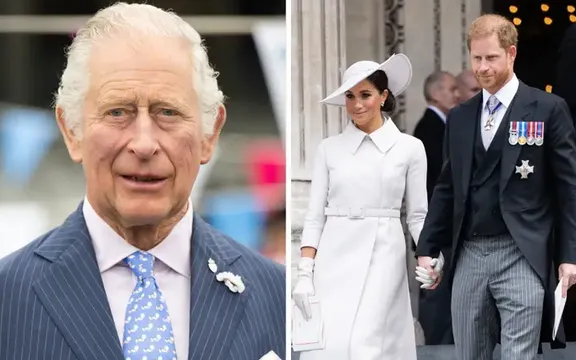
The broader significance of this debate is why it grips American audiences. It reflects the universal tension of walking away from inherited privilege while defining personal autonomy. Meghan’s biracial identity, combined with the scrutiny Harry faces as the son of Princess Diana, adds layers of social and cultural complexity. Observers recognize that while they are no longer performing royal duties, Harry and Meghan’s voices remain influential, and the retention of titles amplifies their platform, creating a unique intersection of heritage and modern celebrity .
Ultimately, the debate over the Sussex titles has no simple resolution. Keeping them may seem unfair to those still committed to duty, while removing them risks perceived cruelty. The Palace is caught between emotional, familial, and institutional pressures, knowing that any decision will be scrutinized worldwide. For Harry and Meghan, the question is not just about honorifics—it is about identity, autonomy, and the balance between legacy and personal freedom .
As the world continues to watch, the situation remains fluid. Reconciliation, rupture, or a quiet decisive move could redefine the Sussex legacy and the monarchy’s approach to modern challenges. The global audience is no longer just observing tradition—it is evaluating it in real time, and the stakes for the Crown and the Sussexes have never been higher .


