
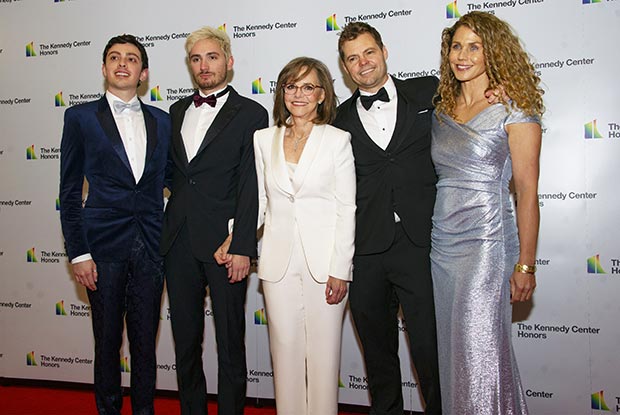
For decades, audiences around the world knew Sally Field as the smiling, talented actress who could light up a screen with warmth, strength, and emotional honesty. From unforgettable Hollywood performances to award-winning dramatic roles, she became one of America’s most beloved stars — admired not only for her talent, but for the resilience and vulnerability she brought to every character she played
Now, as old interviews and deeply personal revelations continue resurfacing online, millions of fans are once again revisiting the heartbreaking story of the trauma she allegedly endured during childhood — and the extraordinary way she transformed years of pain into a life defined by courage, survival, and inspiration.
The emotional discussions exploding across social media are all centered around one haunting question:
How did someone who endured so much darkness still manage to build such an extraordinary life?
According to Field’s own past accounts, her childhood was far more painful than many fans ever realized.

Born into a complicated family environment, she later revealed that growing up often felt emotionally unstable and frightening behind closed doors. While the public eventually saw confidence and charisma on television screens, the young girl inside the home was reportedly struggling with fear, confusion, and emotional isolation.
Years later, Field shared deeply personal allegations involving abuse by her stepfather — revelations that shocked many longtime admirers who had never imagined the emotional burden she had been carrying throughout her rise to fame.
The disclosures immediately sparked widespread heartbreak online.
Many fans said they were stunned by the contrast between the joyful image associated with Field’s early career and the suffering she later described from her private life.
“That smile hid unimaginable pain,” one emotional social media user wrote after clips from an older interview began circulating again.
Others described her story as painfully familiar — another example of how trauma can remain invisible even in people who appear successful, confident, and admired by millions.
But what has moved audiences most is not only the tragedy itself.
It is what happened afterward.
Because despite the emotional wounds she carried for years, Sally Field refused to allow her trauma to completely define her future.
Instead, she slowly transformed survival into strength.
Hollywood itself did not make the journey easy.
Early in her career, Field was often underestimated because of her wholesome television image. Some critics dismissed her as lightweight entertainment rather than a serious dramatic actress capable of emotional depth.
But behind the scenes, Field was fighting battles far bigger than public perception.
Fans now believe much of the emotional intensity that later defined her performances may have come from lived pain few audiences fully understood at the time.
As her career evolved, she stunned Hollywood by taking on increasingly difficult and emotionally layered roles — eventually earning major critical acclaim and proving herself as one of the industry’s most respected performers.
The transformation became impossible to ignore.
She was no longer simply a cheerful television personality.
She became a symbol of emotional endurance.
Many viewers today say revisiting her older performances feels different after learning more about her childhood experiences. Scenes once viewed as simple dramatic acting are now interpreted through a far more emotional lens.
People see vulnerability.
Strength.
Hidden sadness.
Quiet survival.
And perhaps most powerfully of all, authenticity.
That authenticity became one of the defining reasons audiences connected so deeply with her throughout multiple generations.
Unlike many celebrities who carefully protected polished public images, Field often spoke openly about insecurity, fear, motherhood, aging, and emotional pain in ways that felt deeply human rather than manufactured.
For survivors of abuse and trauma, her honesty carried enormous emotional weight.
Across Facebook and TikTok, countless users are now sharing personal reactions to her story, explaining that her willingness to discuss painful experiences made them feel less alone in their own struggles.
“She survived and still learned how to love, work, laugh, and succeed,” one viral comment read.
“That gives hope to people who think trauma destroys everything forever.”
Others pointed out how difficult it must have been for women of her generation to speak publicly about abuse allegations at all — especially during eras when victims were often ignored, doubted, or pressured into silence.
That context has made modern audiences admire her even more.
Many now see Sally Field not only as an actress, but as a survivor who quietly carried enormous emotional burdens while continuing to build a remarkable career and family life under constant public attention.
And yet, despite the heartbreaking nature of her past, the story resonating online today is ultimately not one of defeat.
It is one of endurance.
Because what continues inspiring millions is the fact that her life did not end with childhood pain.
She continued moving forward.
She built a career.
She earned respect.
She became an icon.
She raised a family.
She continued creating.
She continued surviving.
And perhaps most importantly, she eventually found the courage to speak openly about experiences many people spend entire lifetimes trying to hide.
That courage is why her story continues touching audiences decades later.
Especially now, in an era where conversations surrounding trauma, healing, mental health, and survival have become far more open and emotionally visible online.
For younger audiences discovering her story for the first time, the revelations feel shocking.
For longtime fans, they feel heartbreaking.
But for many survivors watching these conversations unfold, Sally Field’s journey represents something even more meaningful:
proof that unimaginable pain does not automatically erase the possibility of hope, success, or emotional rebirth.
The internet may currently be revisiting the darkness of her childhood.
But the reason millions remain inspired is because the story did not stay there.
Against overwhelming emotional odds, Sally Field built a life that proved survival itself can become a form of quiet triumph.
And decades later, that triumph is still giving people hope.


