
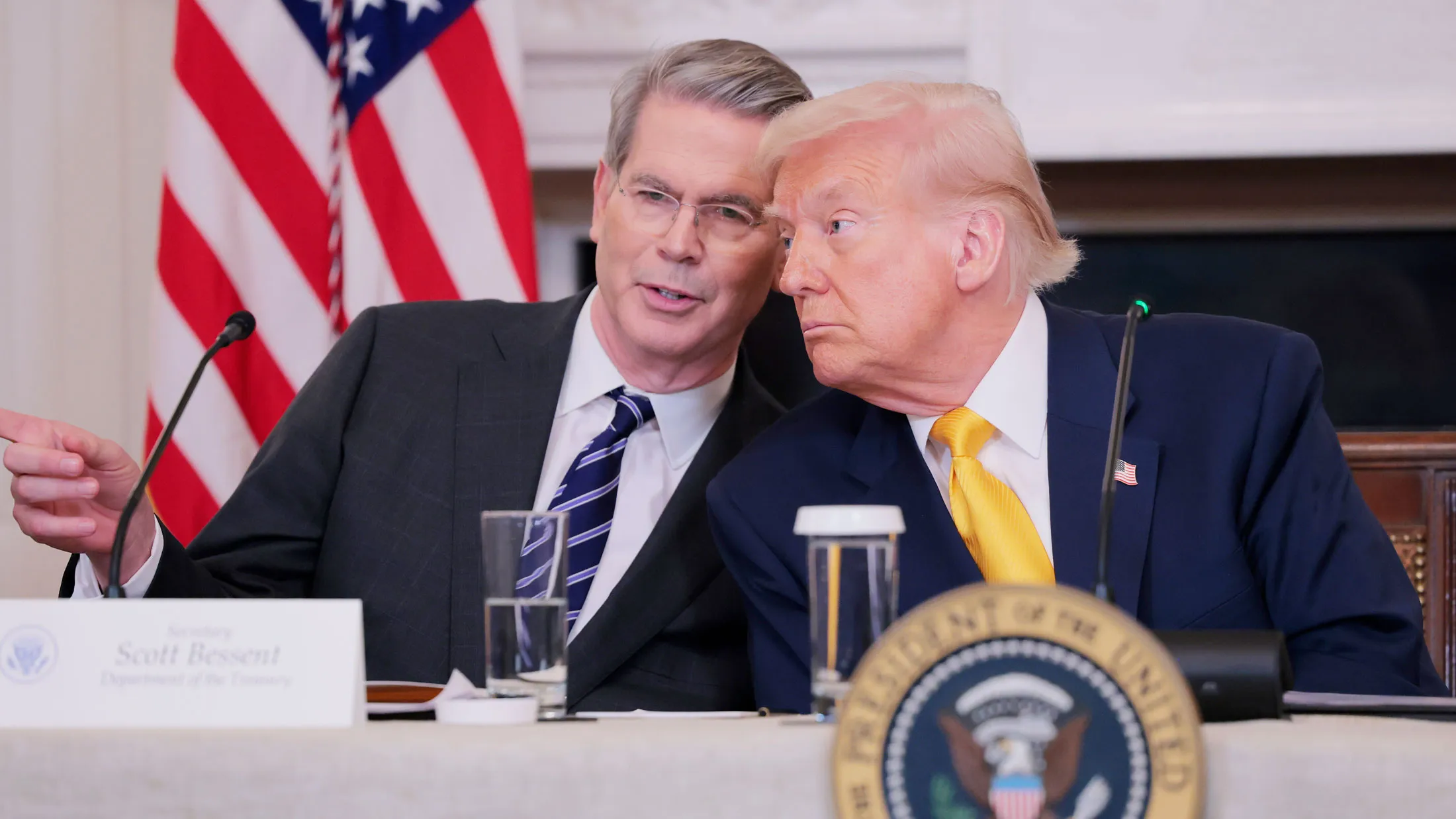
In a moment that has stirred both amusement and contemplation across the political landscape, a recent congressional session witnessed an unexpected eruption of laughter as Trump’s Treasury Secretary, Bessent, took center stage.
This event, which has quickly become a viral sensation, showcases not only the interplay of humor and politics but also the broader implications of such exchanges in the realm of public discourse.
As the political climate continues to polarize, the reactions to Bessent’s remarks offer a unique lens through which we can examine the current state of American politics.

The Scene Unfolds
On April 21, 2026, the congressional chambers were filled with representatives eager to hear the latest updates from the Treasury.
However, what transpired was far from the usual procedural updates.
Bessent, known for his sharp wit and keen insights, delivered a series of remarks that not only targeted Bernie Sanders but also managed to captivate the audience in a way few expected.
The laughter that erupted was not merely a response to jokes; it was a reflection of the underlying tensions and the absurdities that often characterize political debates.
Setting the Stage for Humor
The context of Bessent’s remarks is crucial to understanding the laughter that ensued.
In a time when political divisions seem more pronounced than ever, humor can serve as a bridge or a weapon.
Bessent’s approach combined elements of satire and critique, making it a potent mix that resonated with many.
His ability to dismantle Sanders’ arguments while simultaneously engaging the audience in laughter highlights a significant aspect of modern political communication.

The Art of Dismantling
Bessent’s technique was not just about making jokes; it was about strategically undermining Sanders’ positions.
By employing a blend of humor and factual rebuttals, he was able to present his arguments in a way that was both entertaining and informative.
This approach is reminiscent of classic political satire, where the goal is not just to entertain but to provoke thought and discussion.
The laughter that followed his remarks was indicative of a shared understanding among the audience members, who found common ground in their amusement.
The Impact of Viral Moments
In today’s digital age, moments like these can quickly go viral, reaching audiences far beyond the congressional chambers.
Social media platforms exploded with clips of Bessent’s remarks, allowing the laughter to resonate with millions.
This phenomenon raises questions about the role of humor in politics and its potential to shape public opinion.
As viewers share these moments, they contribute to a narrative that can either bolster or undermine political figures, depending on the context and content of the humor.

A Reflection on Political Discourse
The laughter elicited by Bessent’s comments is a reminder of the complexities of political discourse.
While humor can serve as a tool for engagement, it can also perpetuate divisions.
As Bessent dismantled Sanders’ arguments, he also reinforced certain stereotypes and narratives that exist within the political landscape.
This duality is essential to consider as we navigate the ongoing debates surrounding economic policies and social issues.
The Role of the Audience
The audience’s reaction plays a pivotal role in the effectiveness of political humor.
Bessent’s ability to connect with his audience was evident in their laughter, which served as a form of validation for his remarks.
This interaction highlights the importance of audience perception in political communication.
When politicians can resonate with their audience, they create a sense of camaraderie that can be powerful in shaping political narratives.
The Aftermath of the Laughter
Following the session, analysts and commentators weighed in on the implications of Bessent’s remarks.
Some praised his ability to engage the audience, while others criticized the potential for such humor to trivialize serious issues.
The discourse surrounding this event reflects the broader conversations happening within American society about the role of humor in politics.
As we move forward, it will be essential to consider how moments like these influence public perception and political engagement.
Conclusion: A Moment of Reflection
In conclusion, the laughter that erupted in Congress serves as a microcosm of the current political climate.
Bessent’s remarks not only entertained but also sparked discussions about the effectiveness of humor in political discourse.
As we reflect on this moment, it is crucial to recognize the power of laughter in shaping our understanding of politics.
Whether it serves as a bridge or a barrier, the role of humor in politics will undoubtedly continue to evolve, influencing the way we engage with one another in the public sphere.
As citizens, we must remain vigilant in our consumption of political humor, recognizing both its potential for engagement and its capacity to reinforce divisions.
This moment is a reminder that, in the world of politics, laughter can be a powerful tool—one that can both unite and divide.


